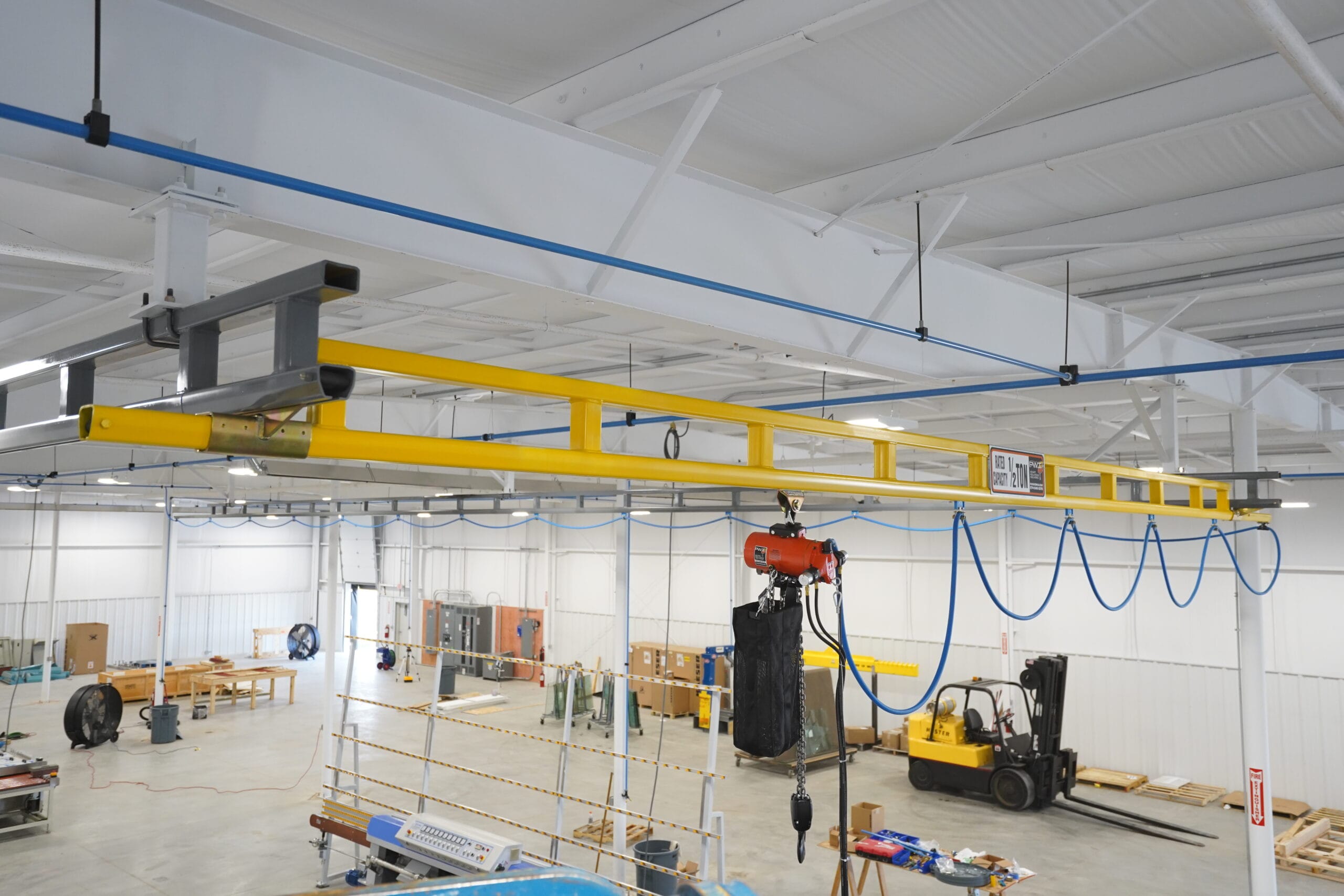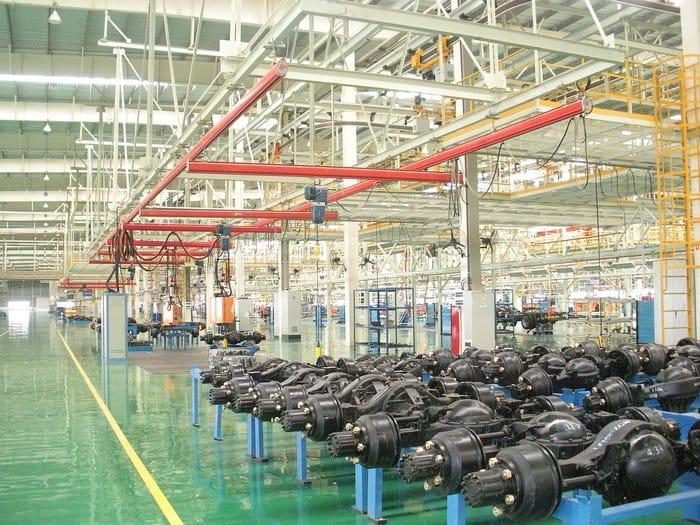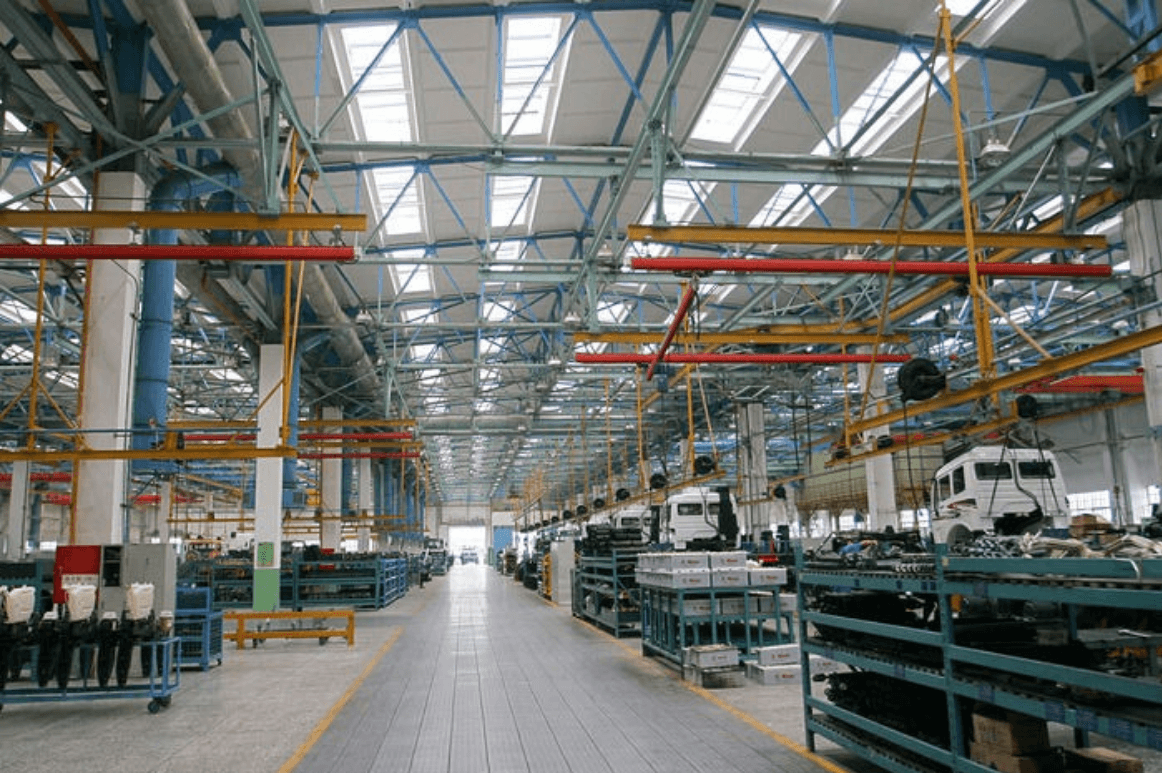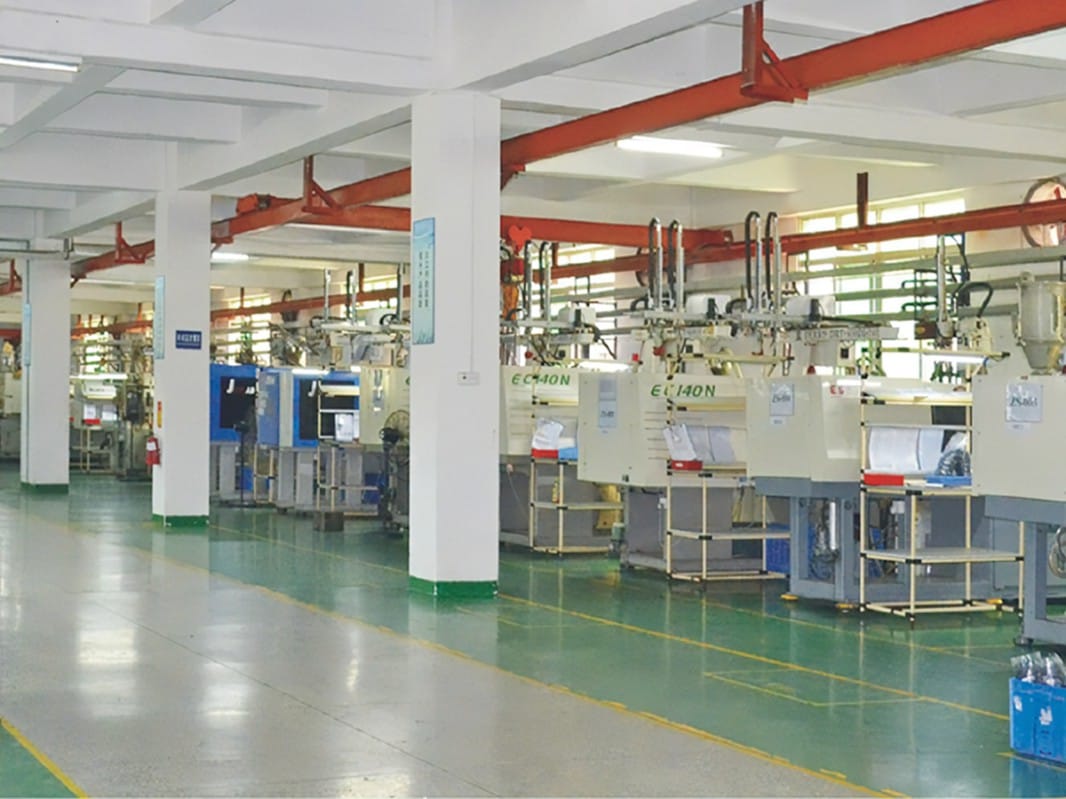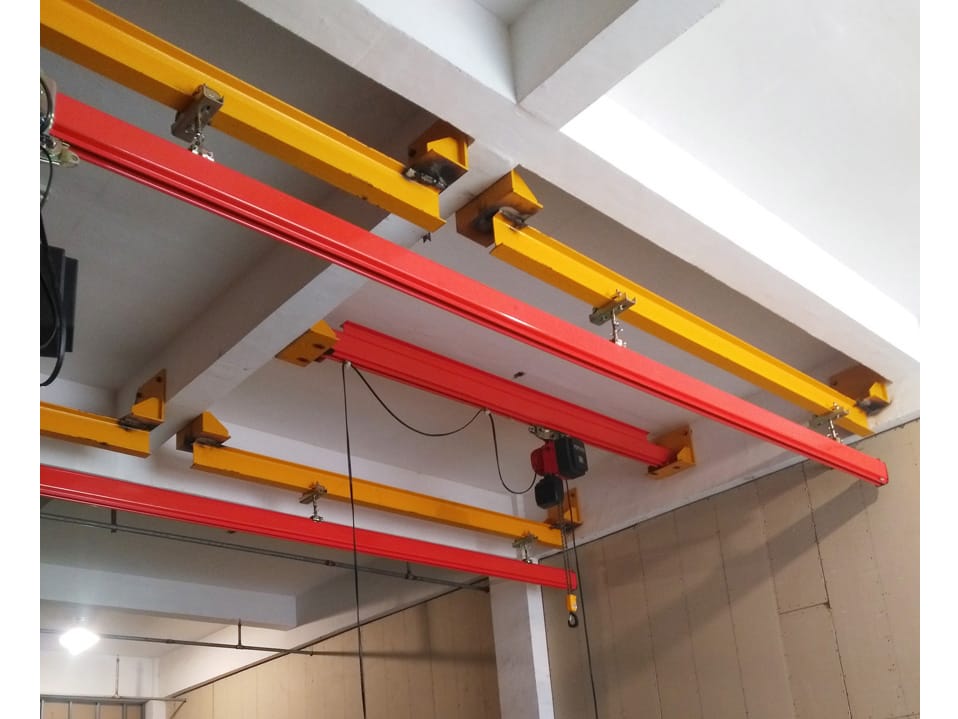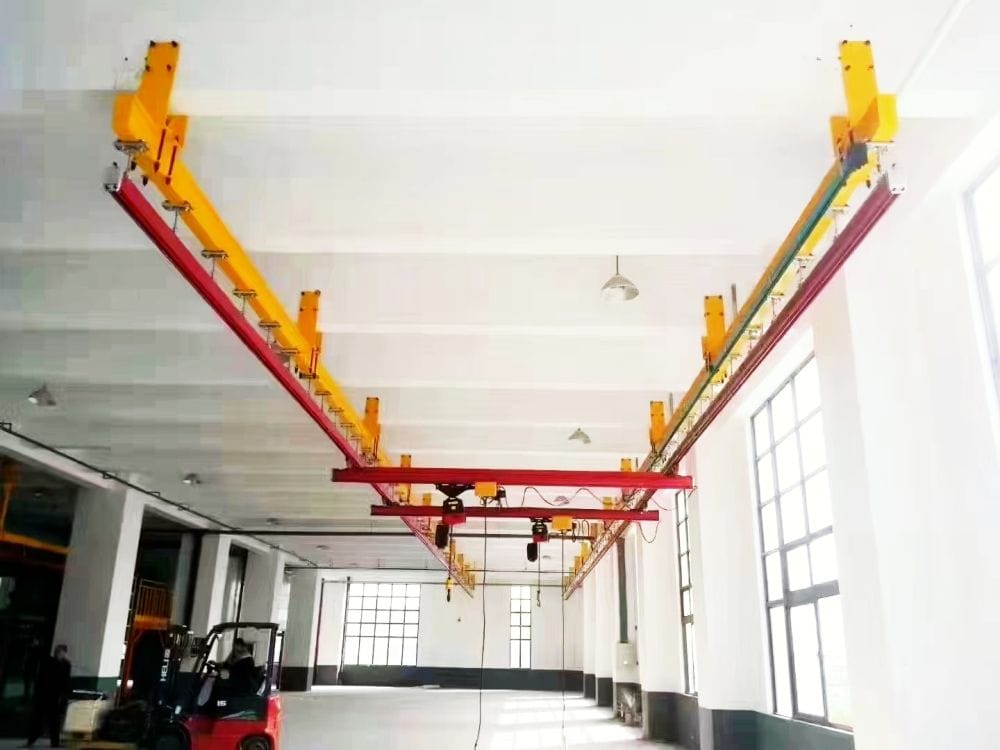
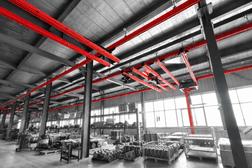
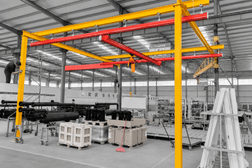
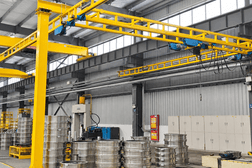
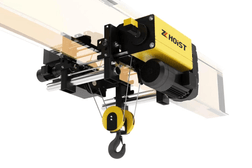
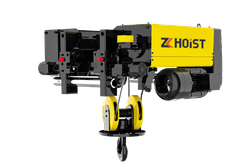
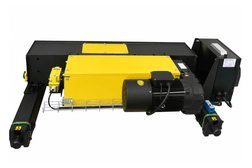
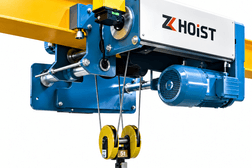
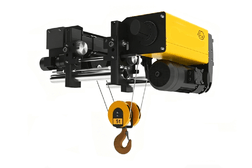
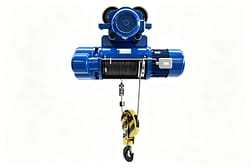
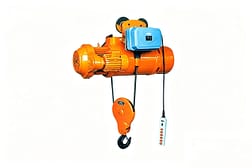
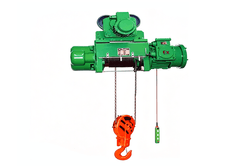
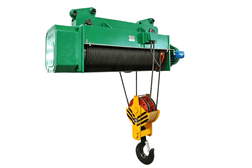
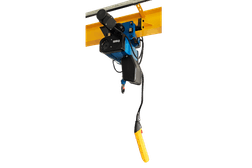
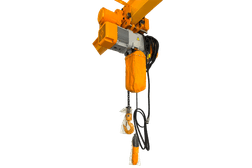
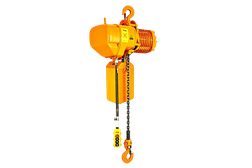
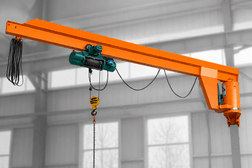
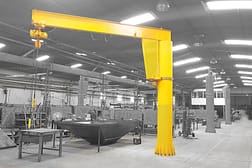
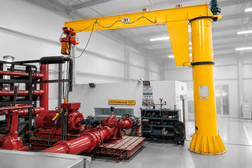
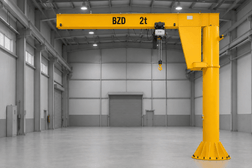
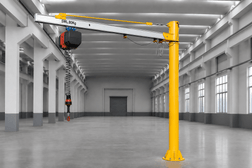
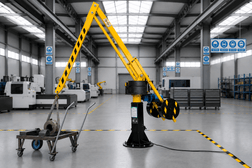
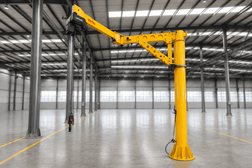
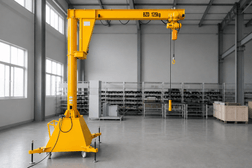
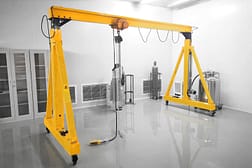
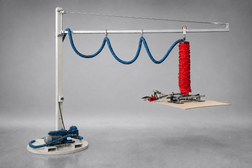
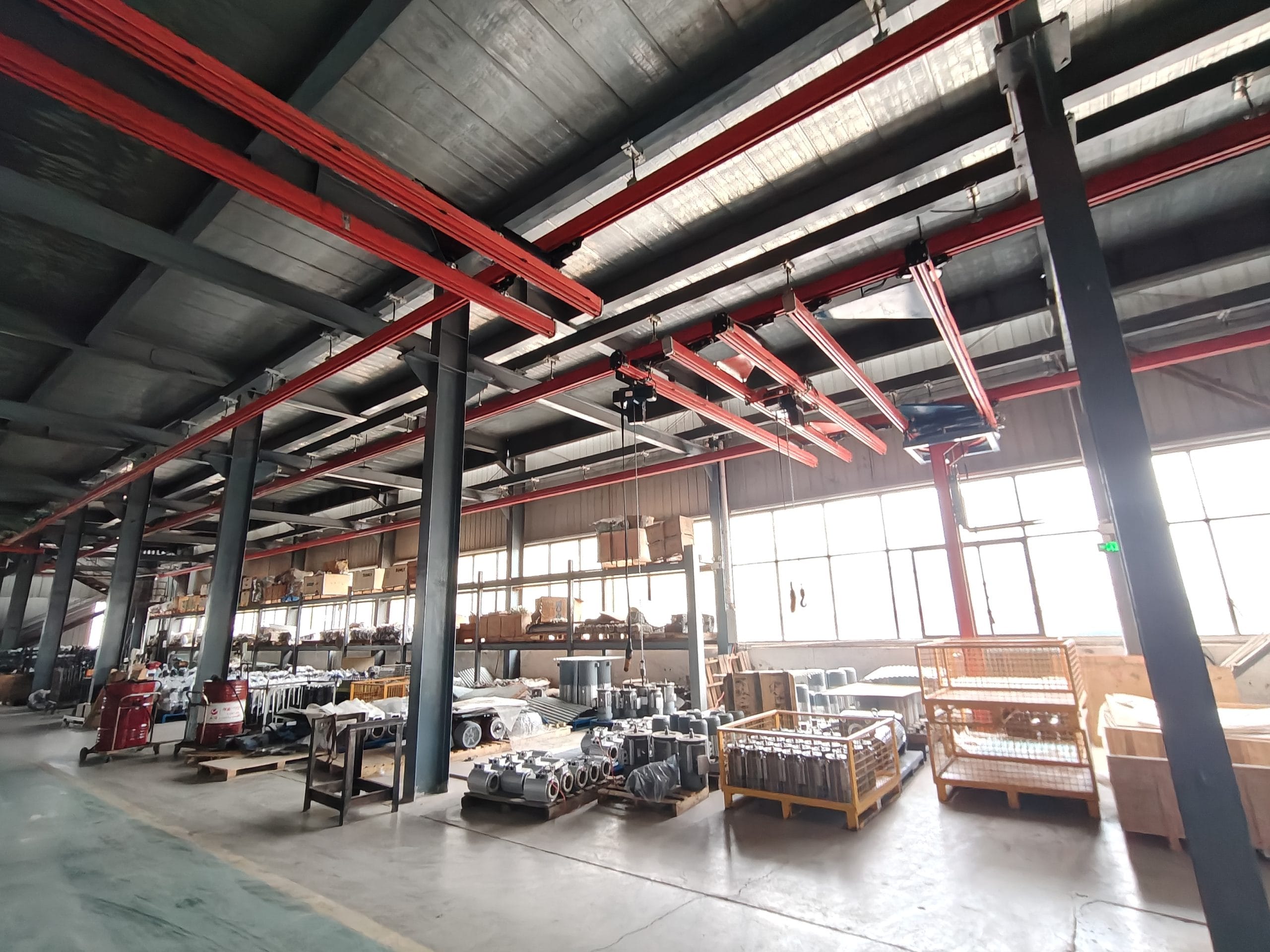
Der deckenmontierte Arbeitsplatzbrückenkran ist ein leichtes Materialhandhabungssystem, das für Arbeitsplätze und Produktionslinien entwickelt wurde. Er wird an Dachstühlen, Bodenplatten oder einer speziellen Stahlkonstruktion befestigt und benötigt keine bodenmontierten Stützpfeiler. Dadurch bleiben die Bereiche um Maschinen, Materialwege und Laufwege frei.
Schienen, Aufhängungen, Fahrwerke, Brückenträger, Hebezeuge und Stromversorgungskomponenten bilden einen rechteckigen Arbeitsbereich. Flexible Verbindungen ermöglichen begrenzte Bewegungsfreiheit bei leichten Lasten und einfache manuelle Bedienung, während starre Verbindungen das Pendeln bei höheren Lasten, häufigen Zyklen und präziserer Positionierung reduzieren. ZKHOIST liefert Einträger-, Zweiträger- und Teleskopkonfigurationen je nach Tragfähigkeit, Spannweite, Gebäudestruktur und Arbeitsplatzgestaltung.
Spezifikationen für deckenmontierte Arbeitsstationen mit Brückenkran
| Parameter | Beschreibung |
| Nennkapazität | 80 kg-3 t |
| Spanne | 3-10 m |
| Hubhöhe | Bestimmt durch Gebäudehöhe, Installationshöhe und Geräteabstand |
| Dienstklasse | A3-A4; Anwendungen mit häufigem oder besonderem Einsatz erfordern eine separate Überprüfung |
| Installation | Aufgehängt an Dachstühlen, Stahlträgern unter Deckenplatten oder speziellen Deckenträgern |
| Verbindungstyp | Flexible / starre Verbindung |
| Brückenkonfiguration | Einträger- / Zweiträger- / Teleskopbrücke |
| Gleismaterial | Schienen aus kaltgewalztem Kohlenstoffstahl; Aluminiumschienen sind optional für leichtere oder sauberere Anwendungen erhältlich. |
| Reise und Kontrolle | Manuelle oder motorisierte Fortbewegung; Fernbedienung oder Pendelsteuerung optional |
| Anpassung | Sonderspannweiten, Start- und Landebahnlayouts, Aufhängungsanordnungen und Überdachungen können auf Bestellung gefertigt werden. |
Vorteile des deckenmontierten Arbeitsplatz-Brückenkrans
Keine Bodensäulen: Freie Arbeitsplätze und Gänge
Der Kran ist an der darüberliegenden Gebäudekonstruktion aufgehängt, sodass sich im Arbeitsbereich keine Stützpfeiler befinden. Maschinen, Transportwagen, Gabelstaplerwege und Fußgängerwege können dadurch flexibler angeordnet werden, insbesondere in beengten oder anlagenreichen Produktionsstätten.
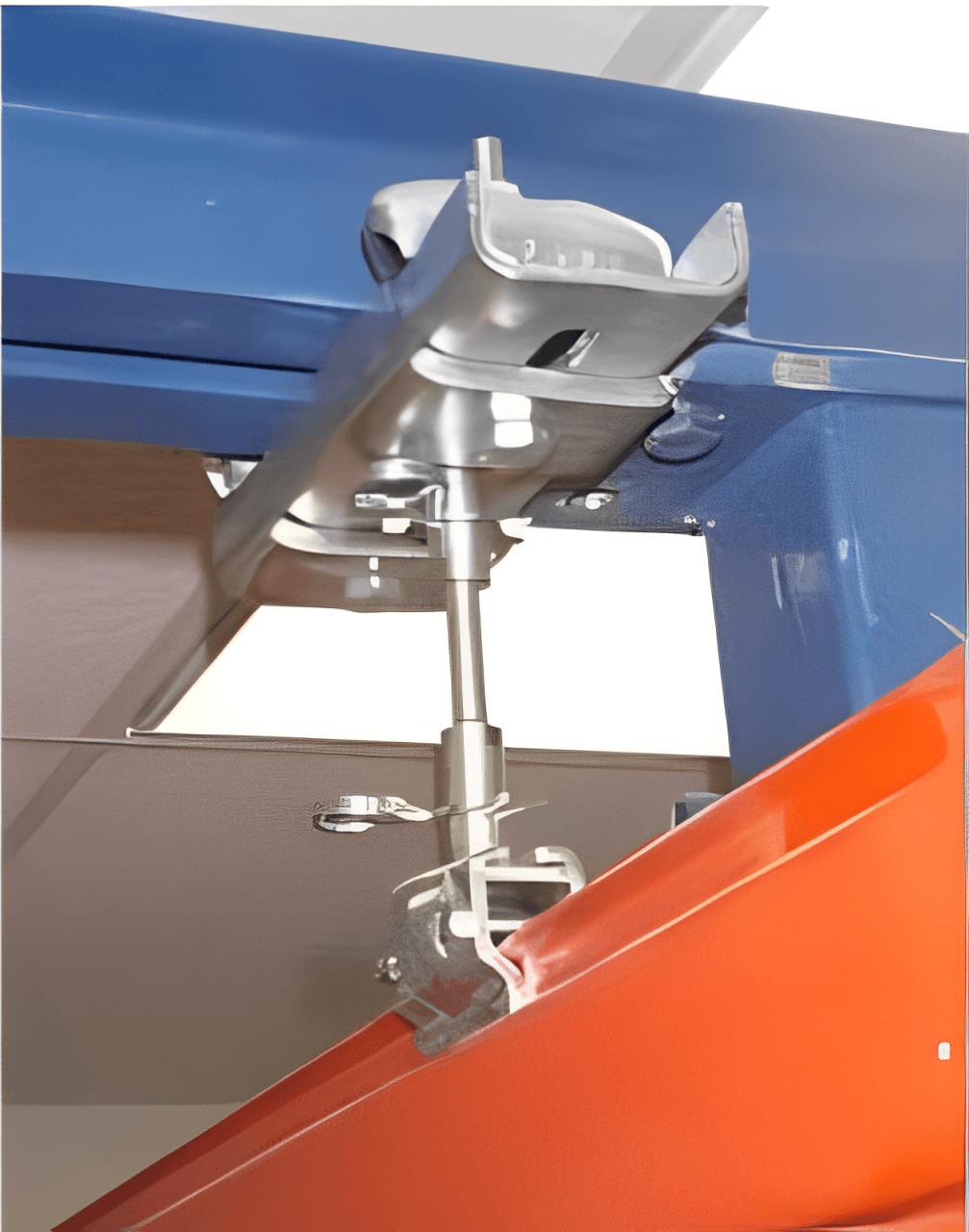
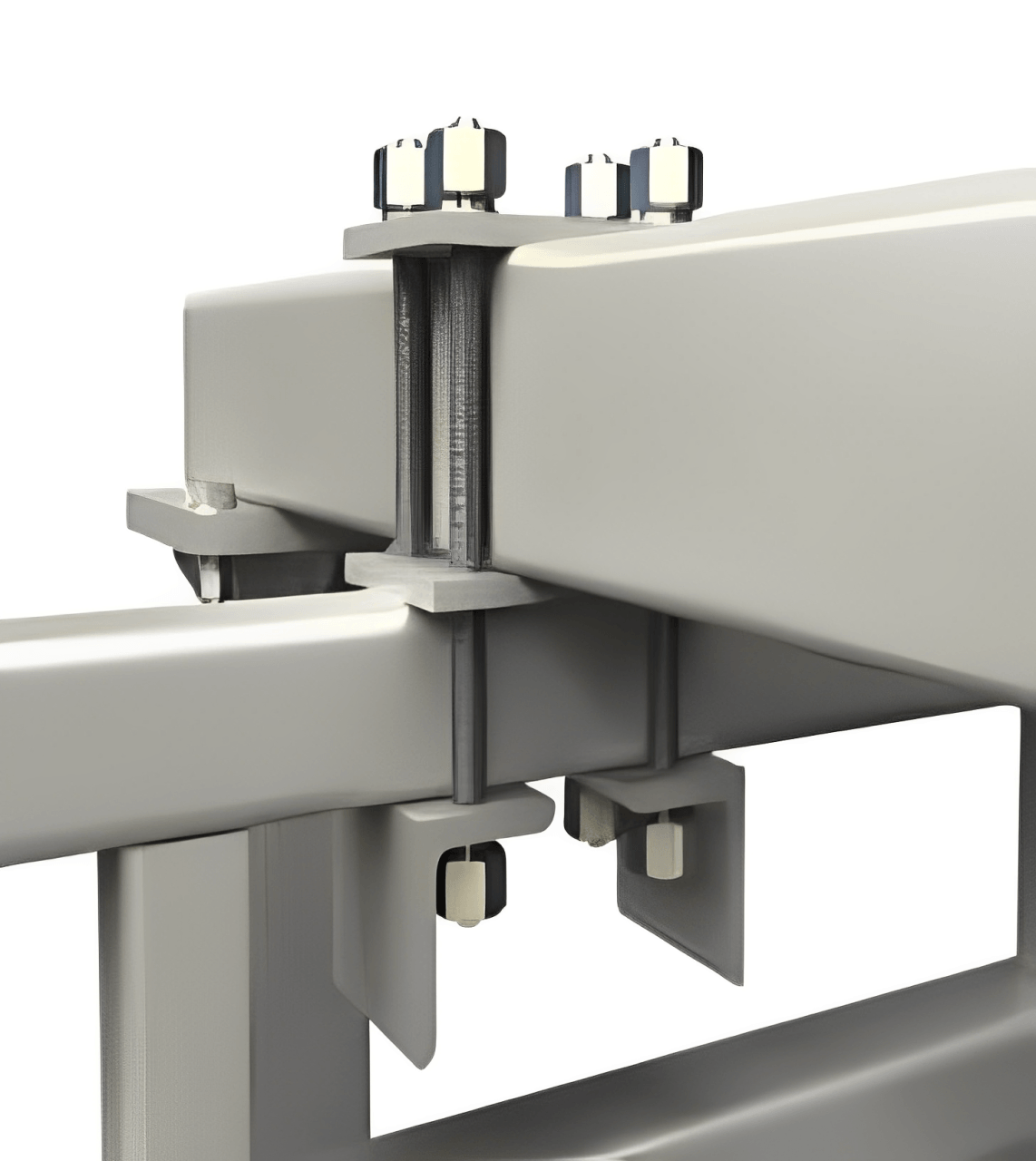
Flexible oder starre Verbindungen je nach Anwendung
Flexible Verbindungen ermöglichen begrenzte Bewegungsfreiheit, gleichen geringe Montagetoleranzen aus und reduzieren Blockierungen während der Fahrt. Starre Verbindungen minimieren das Pendeln und verbessern die Positionierung bei höheren Lasten, häufigen Zyklen oder anspruchsvolleren Genauigkeitsanforderungen.
Leichte Schiene für einfachere manuelle Bewegung
Kaltgeformte, geschlossene Schienen und leichte Brückenträger reduzieren das Systemgewicht und den Rollwiderstand und ermöglichen häufige Anfahrvorgänge, kurze Umsetzvorgänge und die manuelle Positionierung von hängenden Lasten.
Modulares Design für Erweiterung und Umkonfiguration
Modulare Schienen, Brücken, Laufwagen, Aufhängungen und Stromversorgungskomponenten erleichtern zukünftige Änderungen. Nach der Lastprüfung kann die Start- und Landebahn verlängert, der Abdeckungsbereich angepasst oder zusätzliche Brücken installiert werden.
Optionen für Einzel- und Doppelträger
Einträgerkrane sind leichter und einfacher zu handhaben für den routinemäßigen Einsatz an Arbeitsplätzen. Zweiträgerkrane bieten mehr Platz und Stabilität für höhere Tragfähigkeiten, größere Spannweiten oder spezielle Hebezeuge.
Geeignet für die Modernisierung bestehender Anlagen
Sofern die Tragfähigkeit der Gebäudekonstruktion ausreicht, entfällt die Installation von Bodenfundamenten und Stützen, wodurch die Beeinträchtigung laufender Produktionsbereiche minimiert wird. Jegliche Verstärkung der Dachstühle oder die Notwendigkeit separater Träger muss durch eine statische Prüfung ermittelt werden.
Arbeitsplatz-Einträger-Hängekran
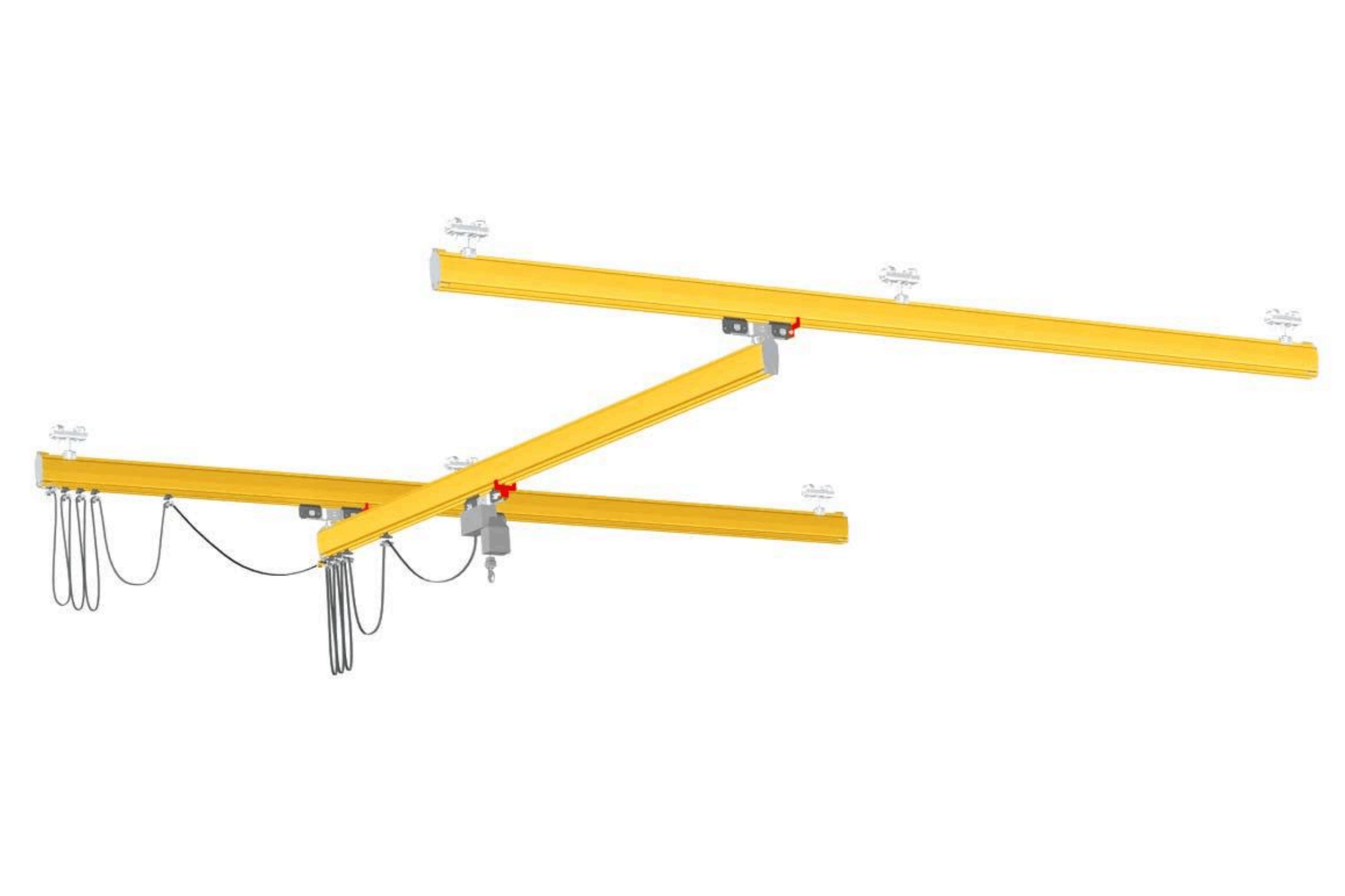
Ein Einträgersystem besteht aus zwei Längsfahrbahnen und einem Querträger. Sein geringes Eigengewicht und die einfache Konstruktion eignen sich für Montage-, Maschinen-, Bauteil- und Wartungsstationen. Bei der Auswahl müssen die Nennlast, das Gewicht der Lastaufnahmemittel, die Spannweite, die Brückenlänge und die Betriebsfrequenz berücksichtigt werden.
| Schiene | Punkt | 80 | 125 | 250 | 500 | 1000 | 2000 | 3200 |
| ICH | Spanne | 4.4 | 3.8 | 1.8 | / | / | / | / |
| Balkenlänge | 5 | 4 | 2 | / | / | / | / | |
| II | Spanne | / | / | 7.7 | 5.7 | 2.7 | / | / |
| Balkenlänge | / | / | 8 | 6 | 3 | / | / | |
| III | Spanne | / | / | 10.5 | 9.2 | 6.6 | 4 | 3.4 |
| Balkenlänge | / | / | 13 | 11 | 8 | 5 | 4 |
Arbeitsplatz-Doppelträger-Hängekran
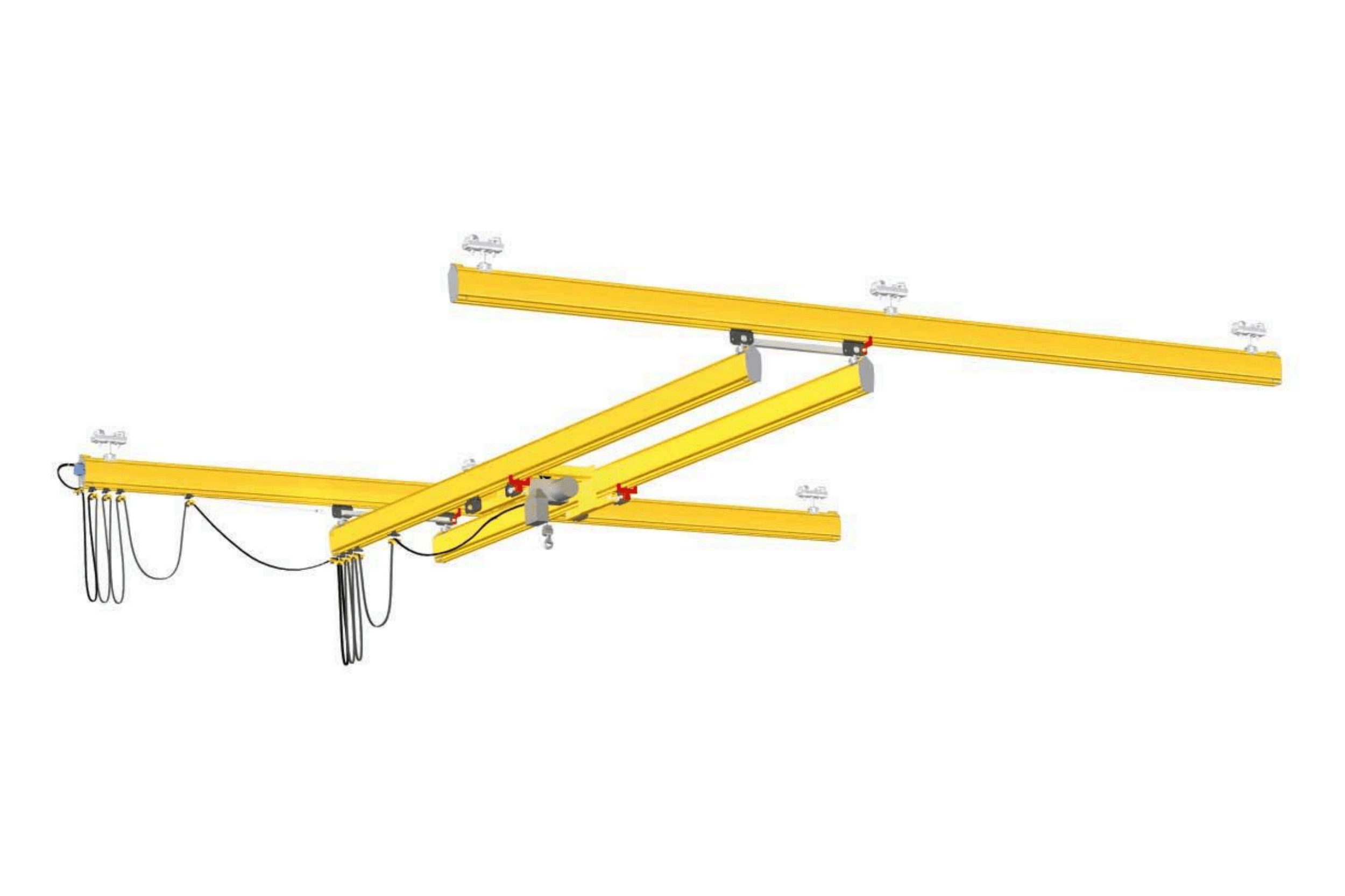
Ein Doppelträgersystem nutzt zwei parallele Brückenträger zur Aufnahme des Hebezeugs oder einer speziellen Hebevorrichtung. Es bietet mehr Bauraum und eine verbesserte Lastverteilung für angetriebene Fahrwerke, Vakuumheber, Manipulatoren und exzentrische Lasten und eignet sich daher für höhere Tragfähigkeiten, größere Spannweiten und Anwendungen, die eine präzisere Lastkontrolle erfordern.
| Schiene | Punkt | 125 | 250 | 500 | 1000 | 2000 | 3200 |
| ICH | Spanne | 5.1 | 4 | 2.8 | / | / | / |
| Balkenlänge | 7 | 5 | 3 | / | / | / | |
| II | Spanne | / | 10 | 8.1 | 5.9 | 3.7 | / |
| Balkenlänge | / | 12 | 10 | 8 | 4 | / | |
| III | Spanne | / | 10.5 | 10.5 | 9.3 | 6.7 | 5.2 |
| Balkenlänge | / | 14 | 14 | 12 | 7 | 7 |
Unterschiede zwischen flexiblen und starren Arbeitsplatzkransystemen
| Vergleich | Flexibler Arbeitsplatzkran | Starrer Arbeitsplatzkran |
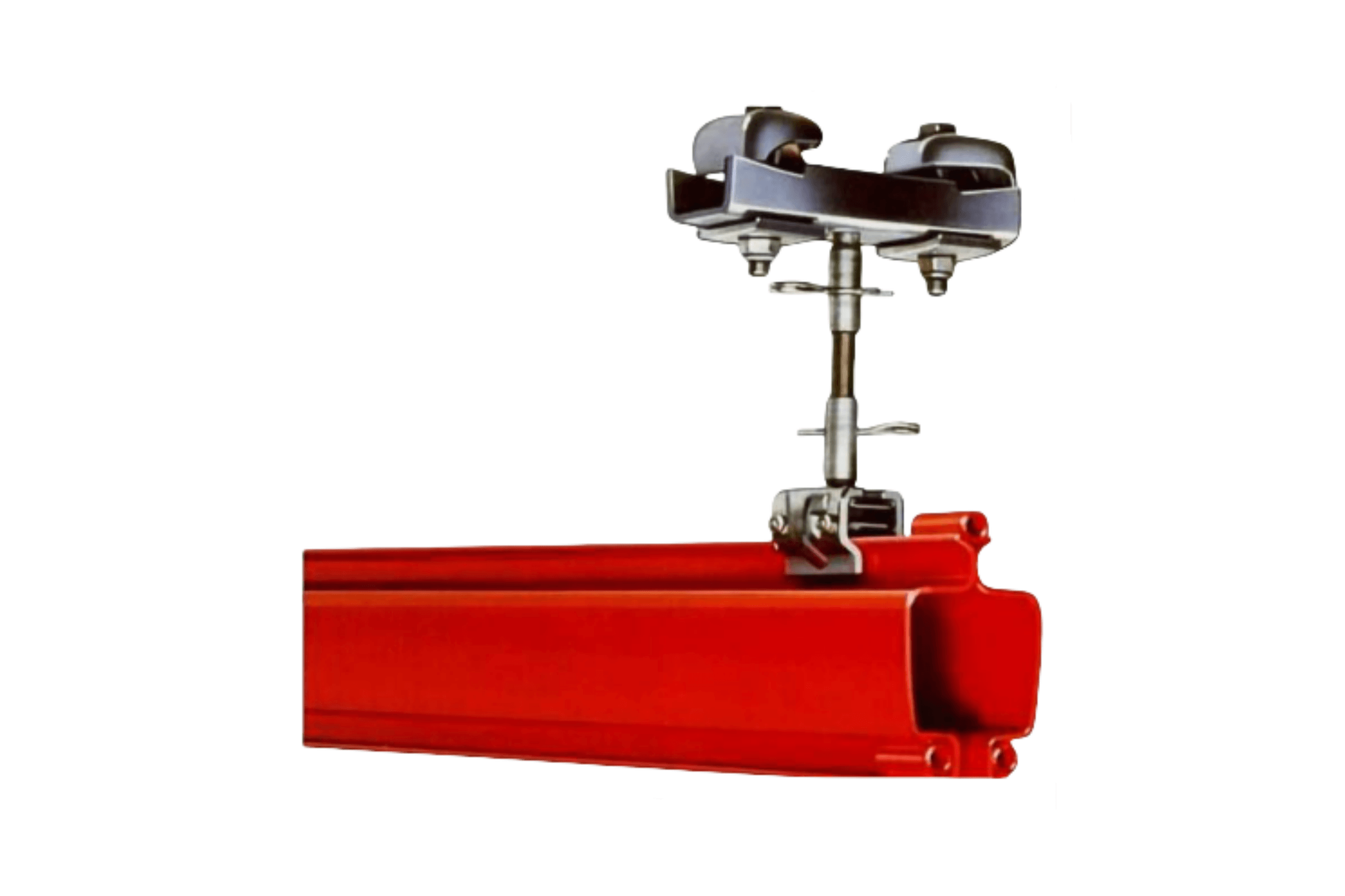
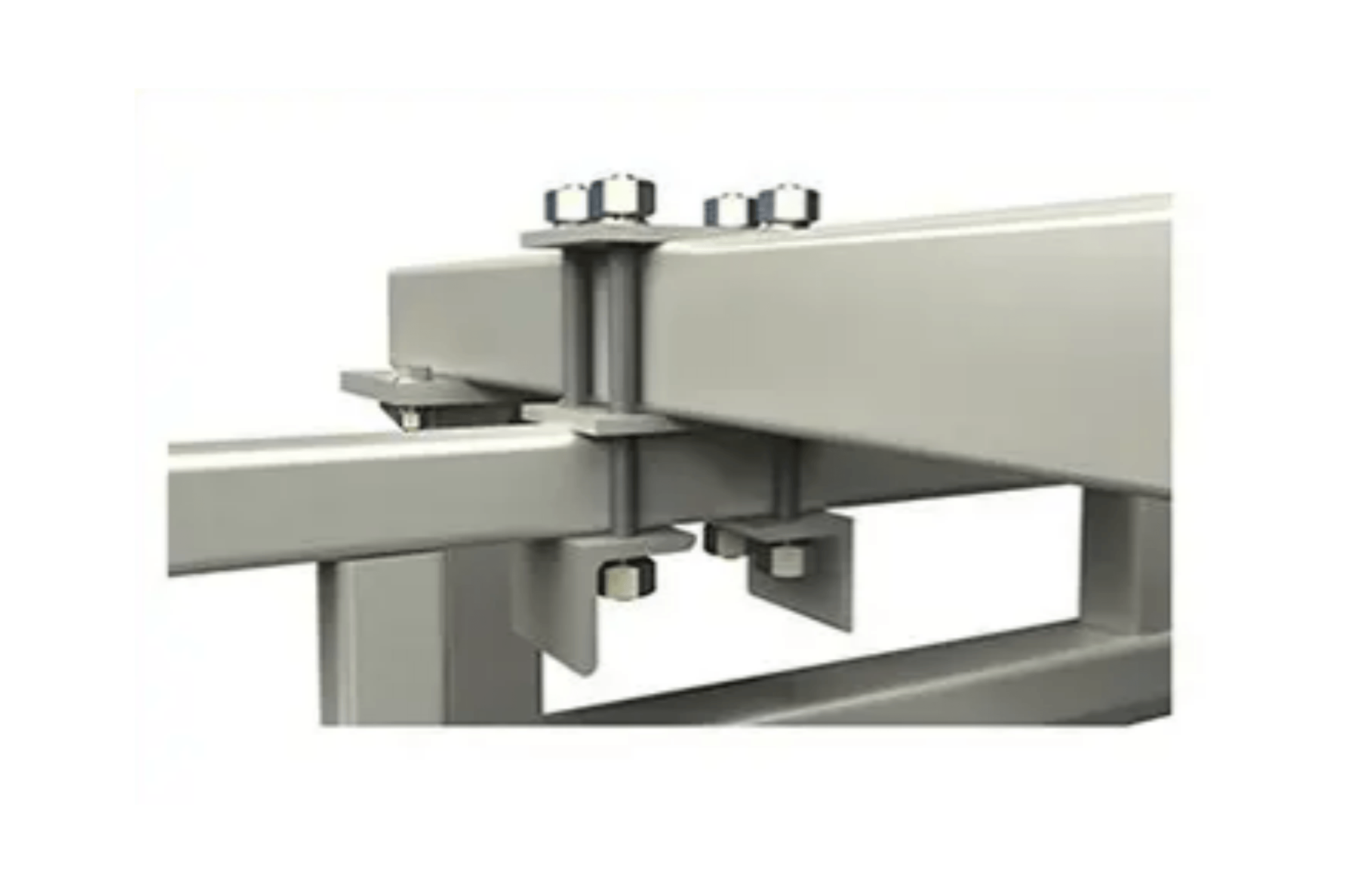
| Schienenstruktur | Kaltgeformte geschlossene Schiene (C-Profil-Schiene) | I-Träger, Kastenträger oder andere starre Schienenprofile |
| Verbindungsmethode | Gelenkverbindungen mittels Universalgelenken, Kugelgelenken und Aufhängungsbaugruppen ermöglichen Winkelbewegungen | Starre Schraubverbindungen mit Verbindungsplatten, die praktisch keine Bewegung zulassen |
| Artikulationsfähigkeit | Ermöglicht eine begrenzte Winkelbewegung | Praktisch keine Artikulation |
| Betriebsstabilität | Ermöglicht eine leichte Bewegung für eine sanftere Fortbewegung | Höhere strukturelle Steifigkeit und Betriebsstabilität |
Produktanwendungspräsentation