
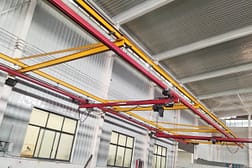
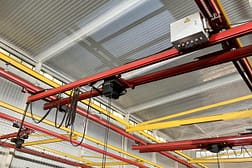
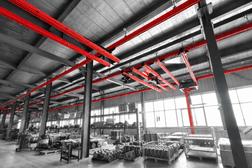
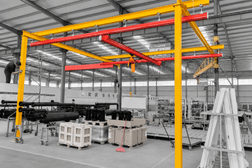
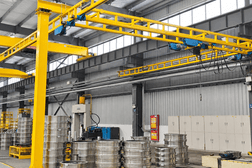
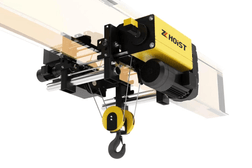
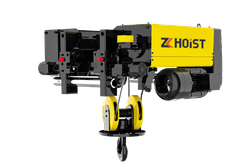
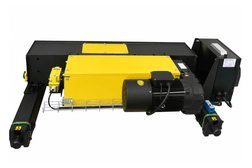
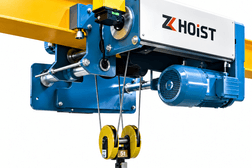
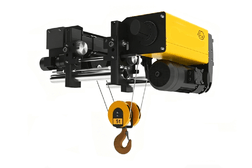
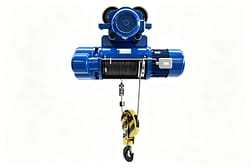
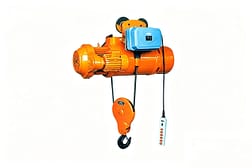
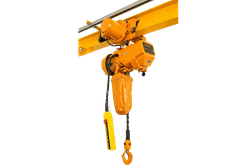
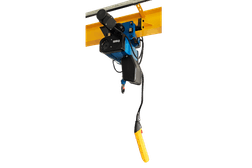
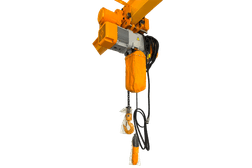
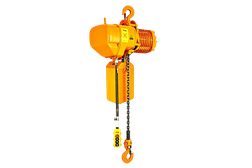

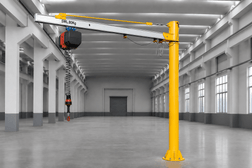
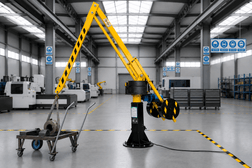
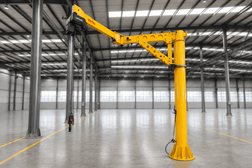
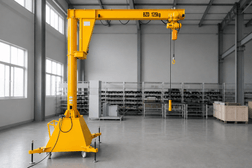
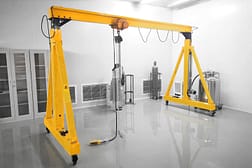
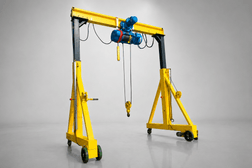
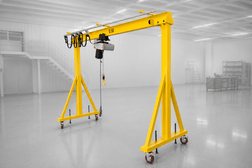
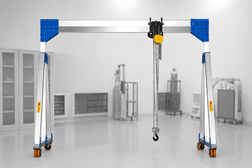
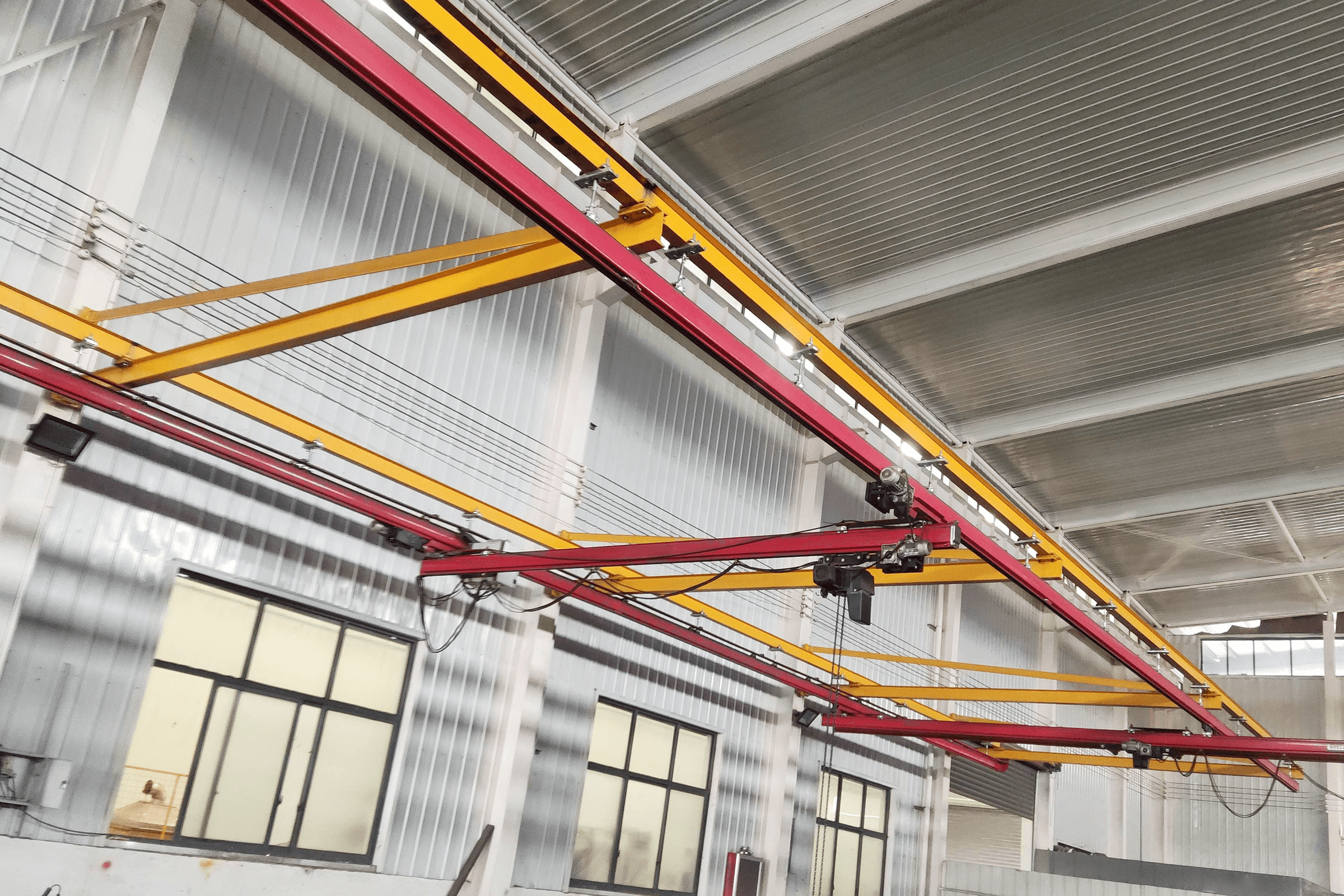
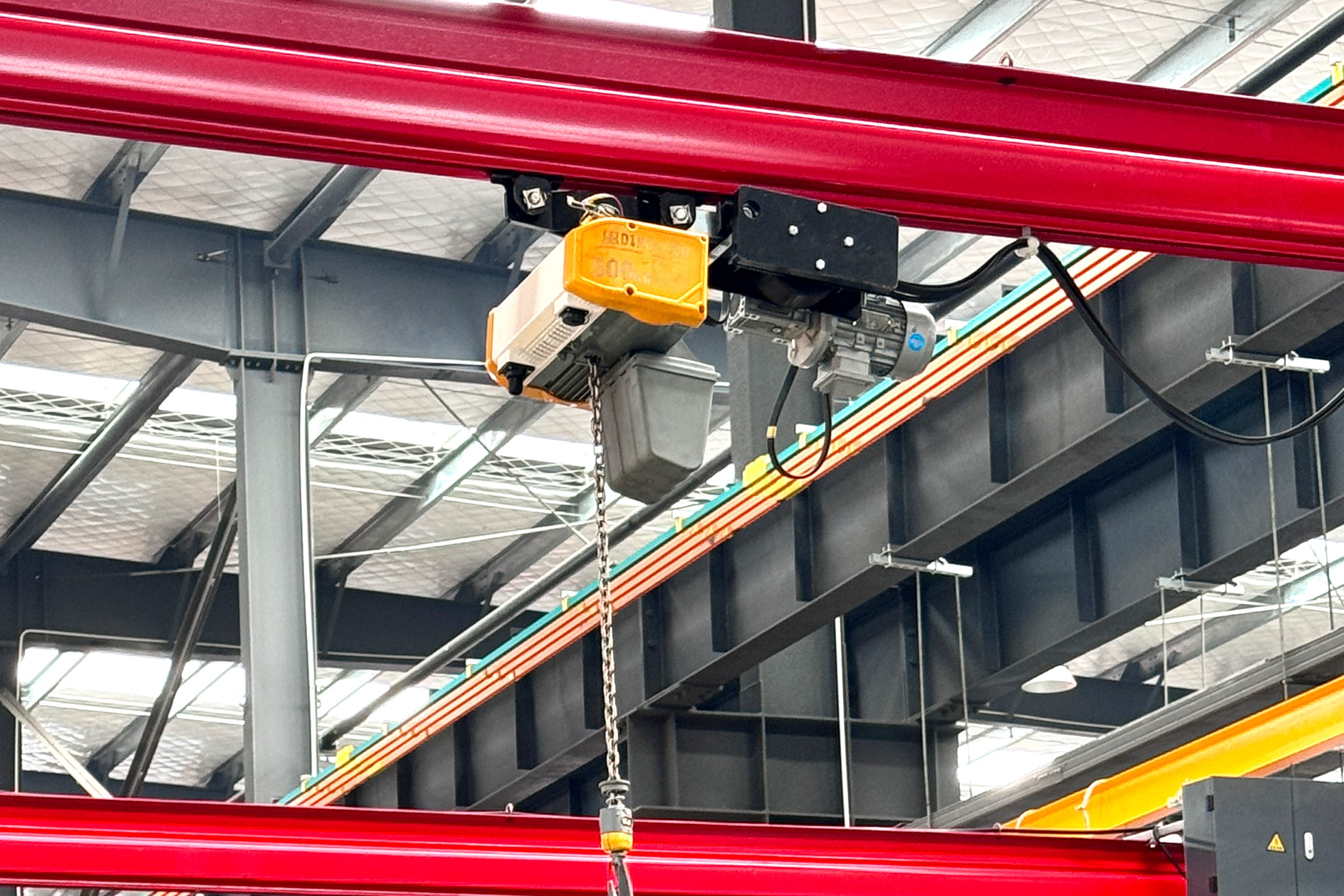
Flexible single girder suspension cranes uses a lightweight, modular KBK rail system for frequent lifting within a defined workstation or production area. The crane bridge travels beneath two parallel suspended runways, while a chain hoist trolley moves along the bridge to provide three-axis load movement.
The articulated connections between the bridge and runway trolleys allow limited angular movement. This helps the crane travel smoothly, reduces the risk of binding, and allows the system to accommodate minor runway misalignment. It is a practical choice for assembly lines, machine workstations, maintenance areas, warehouses, and other operations where easy manual movement and unobstructed floor space are important.
ZKHOIST customizes the capacity, bridge span, runway length, lifting height, suspension arrangement, hoist, and power supply around the customer’s workshop and handling process.
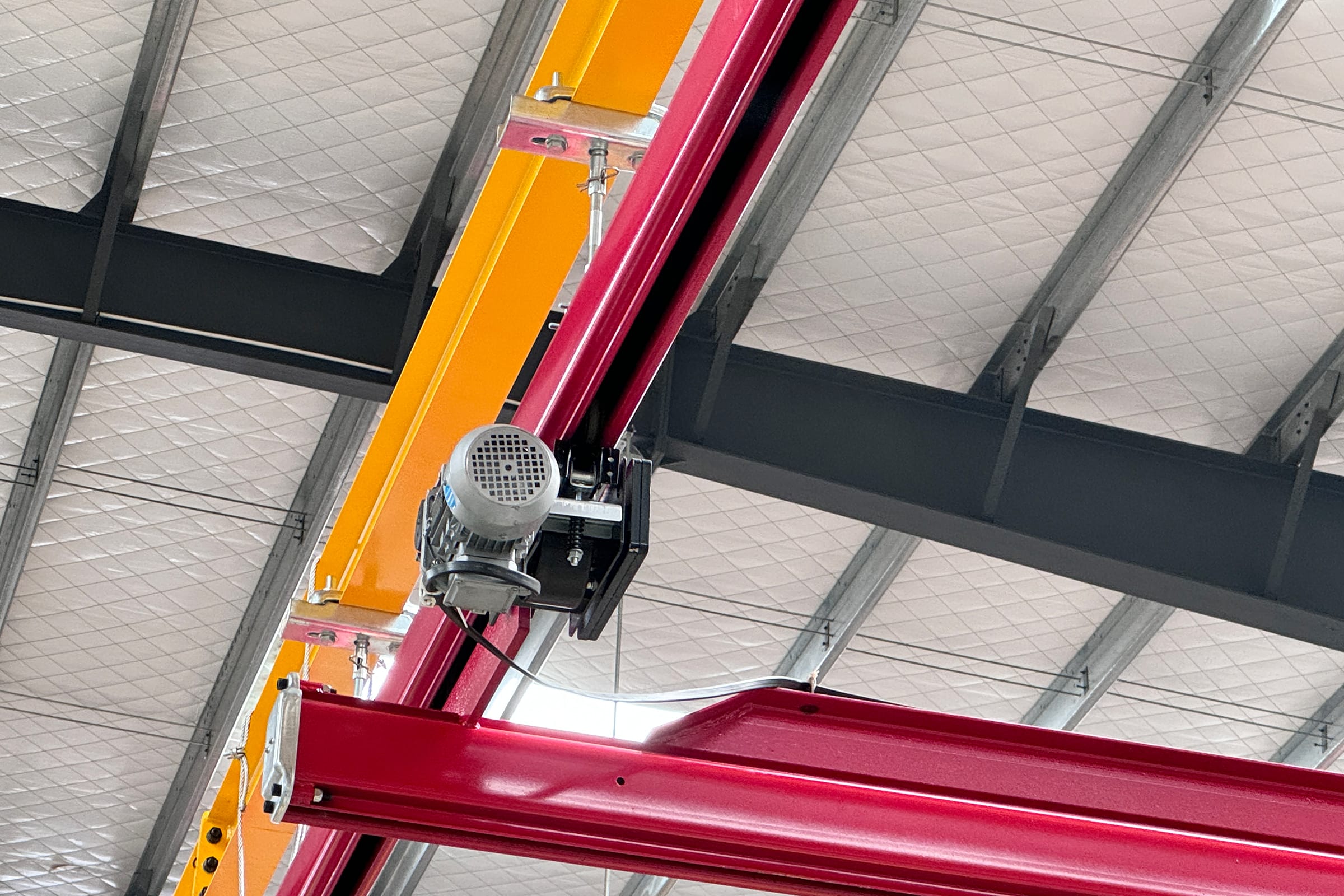
Flexible Single Girder Workstation Cranes Parameters
| Item | Available configuration |
| Rail system | Cold-formed enclosed steel profile |
| Catalog capacity range | 80-2,000 kg |
| Bridge span | Selected according to capacity and rail model |
| Runway length | Customized |
| Lifting height | Customized |
| Installation | Suspended from a verified roof structure or engineered overhead support steel |
Key Advantages of Single Girder Suspension Cranes
Easy Manual Movement
The enclosed profile rail and matching trolley are designed to reduce rolling resistance. For suitable loads and travel distances, one operator can move the bridge and position the load without powered bridge travel.
Articulated Travel Without Binding
Flexible joints connect the bridge end trucks to the suspended runway system. The limited articulation helps the bridge pass through minor runway variations without the wheel binding that can occur in an overly constrained arrangement.
More Usable Floor Space
The runways are suspended from the building structure or engineered overhead steel. No crane columns are required inside the working area, helping keep aisles, machine access, and material routes clear.
Modular and Adaptable Layout
Standard rail sections, suspension assemblies, trolleys, end stops, power-supply parts, and hoist components can be combined around the workstation layout. The runway length and working area can be planned for future adjustment, subject to a new engineering check.
Lightweight Single Girder Structure
The single bridge girder keeps system deadweight and moving mass lower than a comparable double girder arrangement. It is normally the first configuration to evaluate for light-duty workstation handling.
Enclosed Running Surface
The cold-formed enclosed profile helps limit dust entering the trolley running surface. The shaped running surface helps guide the trolley and supports smooth, low-resistance travel.
Single Girder Suspension Cranes Typical Applications
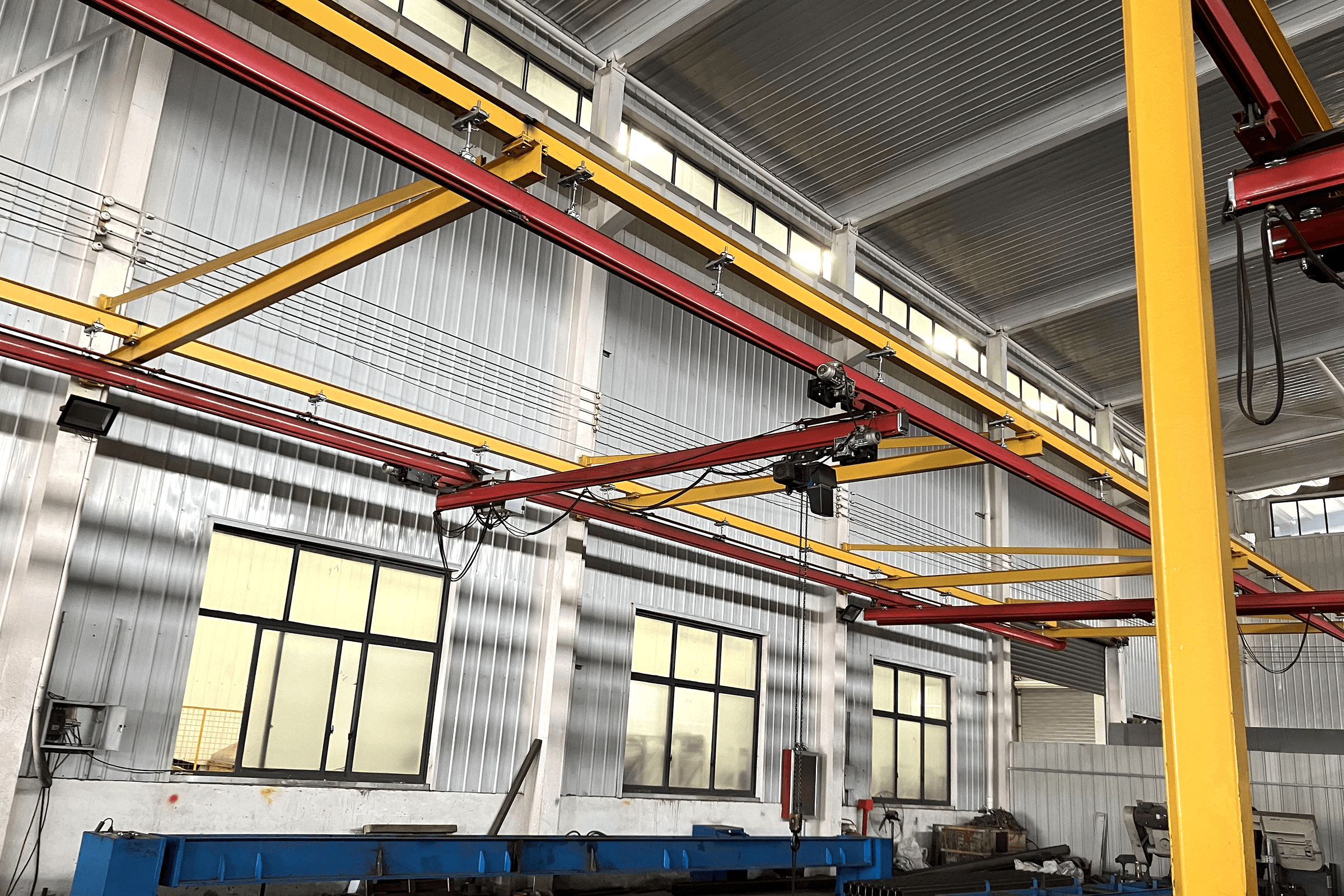
Assembly Workstations
Lift and position motors, gearboxes, frames, batteries, fixtures, and other components beside an assembly line without blocking the floor route.
Machine Loading and Unloading
Move workpieces between pallets, machine tools, inspection stations, and nearby process equipment within a defined work cell.
Maintenance Areas
Handle motors, pumps, tooling, rollers, and machine components during planned maintenance and equipment replacement.
Warehousing and Packing
Transfer products between shelves, pallets, inspection benches, and packing stations while keeping forklift and pedestrian routes available.
Repetitive Short-Distance Handling
Support frequent lifting where a jib crane does not provide enough rectangular coverage and a conventional overhead crane would be unnecessarily large.
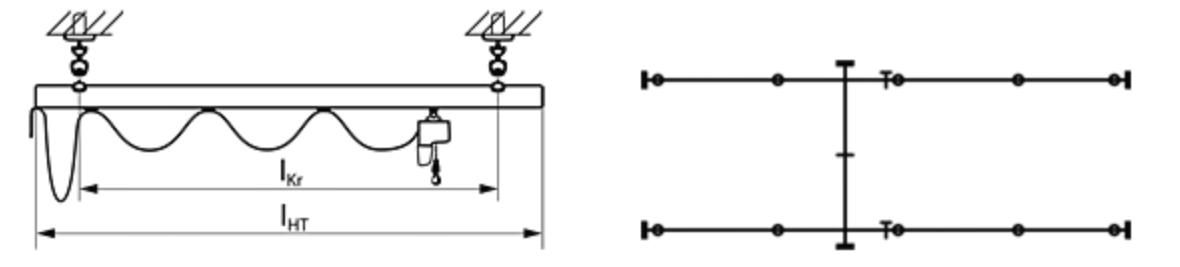
Track Technical Data
| Choose a flexible single girder crane when | Consider a flexible double girder crane when |
| The load and span fit the single girder selection range | A larger span or higher load is required |
| Low moving weight and easy manual travel are priorities | Greater bridge stability is important |
| A conventional hook or compact lifting device is used | The lifting device must be arranged between two girders |
| The workstation needs a simple, economical layout | The load, manipulator, or attachment creates a more demanding load case |
