

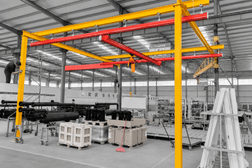
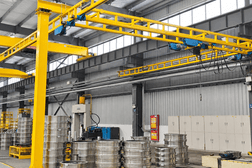



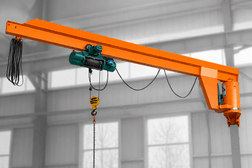
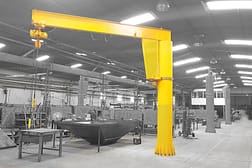
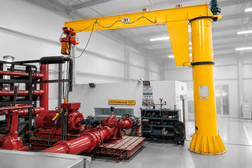
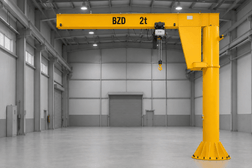
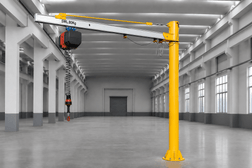
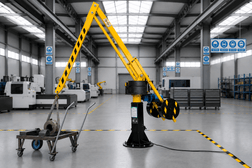
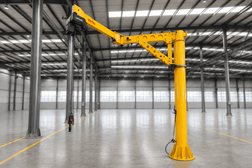
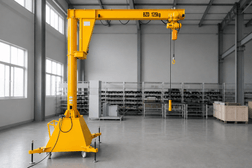
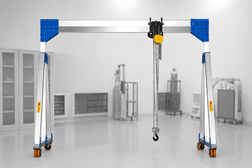

Whether a freestanding jib crane is installed securely affects not only its normal operation but also lifting safety and long-term service life. During operation, a load positioned near the end of the jib arm creates a significant overturning moment on the crane column and foundation. Even when two jib cranes have the same rated lifting capacity, different jib lengths can result in very different requirements for the foundation and anchoring system.
Therefore, the connection between the crane base and the foundation should not be selected based on lifting capacity alone. Other factors must also be considered, including rated load, jib length, operating frequency, concrete conditions, and site construction conditions.
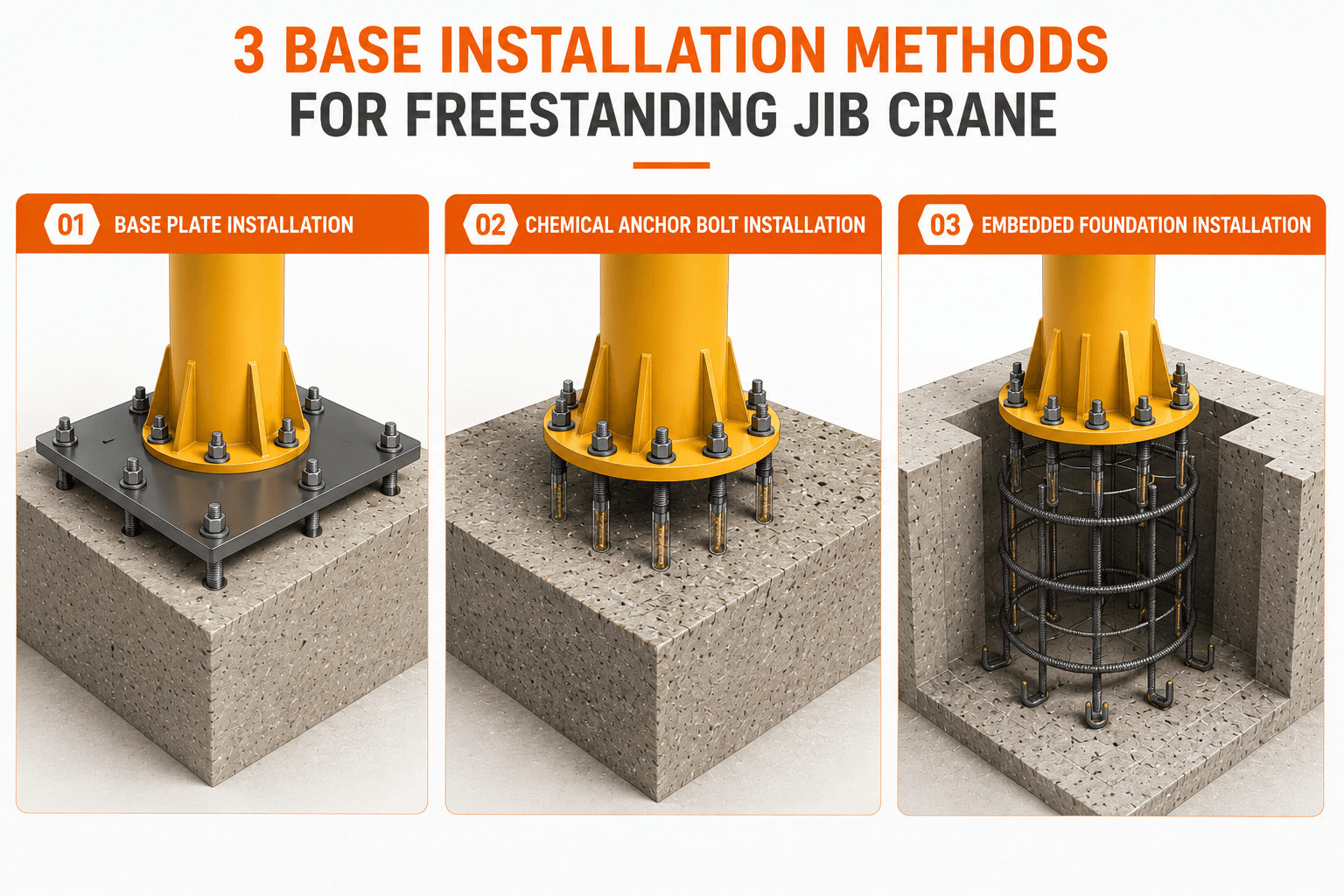
There are three common foundation connection methods for a freestanding jib crane: Large base plate installation, Chemical anchor bolt installation, and Embedded anchor cage foundation.
Each method has its own suitable applications. There is no single foundation solution that is suitable for every freestanding jib crane project.
Large Base Plate Installation: Distributing Loads Over a Larger Foundation Area
Large base plate installation can be used for some small- and medium-capacity freestanding jib cranes, typically in the approximate range of 1–3 tons. However, whether this method is suitable must be verified according to the jib length, overturning moment, base plate dimensions, anchor arrangement, and concrete foundation conditions.
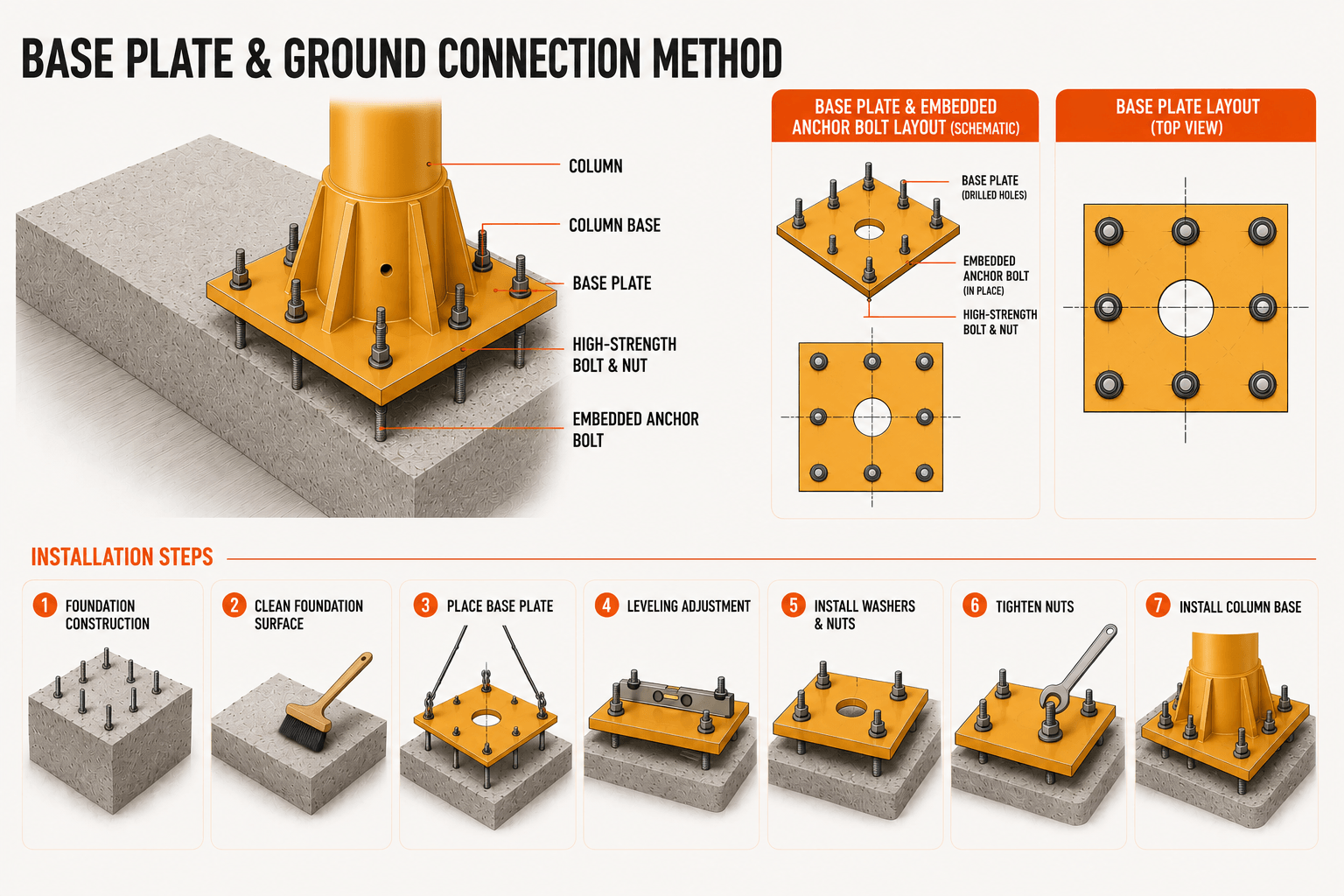
This installation method uses a wider and thicker steel base plate beneath the crane column, with multiple anchor points distributed across the plate.
It is important to understand that a larger base plate does not mean the freestanding jib crane can simply be installed on an ordinary workshop floor, nor can it replace a properly designed concrete foundation.
The main purpose of the larger base plate is to increase the load distribution area and provide additional anchoring points, allowing the loads and overturning moment generated by the jib crane to be transferred over a larger foundation area.
When Is a Large Base Plate Suitable?
If a new workshop floor is being constructed, anchor bolts can be embedded during concrete pouring. When installation space is limited and excavating a large foundation pit for an anchor cage is inconvenient, a large base plate can be considered.
If the entire workshop floor is going to be newly poured, embedded anchor bolts can also be positioned in advance according to the jib crane design. This may reduce the amount of additional excavation required for a separate deep foundation.
In areas where several machines are installed close together and an integrated reinforced concrete floor or foundation is available, a larger base plate may also help distribute localized loads over a wider area.
What Is the Difference Between a Large Base Plate and an Embedded Anchor Cage?
Both methods require a reliable concrete foundation, but their anchoring principles are different.
A large base plate primarily distributes loads over a wider foundation area through its larger footprint and multiple anchoring points.
An embedded anchor cage, on the other hand, uses reinforcement and anchor bolts embedded deeper into the concrete foundation to create a more integrated anchoring system. It generally provides better structural integrity and resistance to overturning forces.
For high-capacity cranes, long jib arms, frequent lifting operations, or applications with large overturning moments, an embedded anchor cage foundation should normally be evaluated first rather than simply increasing the base plate size.
Basic Installation Procedure for a Large Base Plate
- 1. Construct the concrete foundation
Pour the concrete foundation according to the foundation design and position the embedded anchor bolts according to the base plate hole pattern. - 2. Position and level the large base plate
Clean the foundation surface, lift the base plate into position, align it with the embedded anchor bolts, and adjust its center position and level. - 3. Tighten the anchor nuts
Install washers and nuts, then tighten them gradually and evenly in a diagonal sequence. - 4. Install the crane column
Connect the column base to the large base plate, tighten the connection bolts, and check the vertical alignment of the column. - 5. Final inspection and grouting if required
Check all connections, base plate contact, and column verticality. If a grout layer is specified in the foundation design, apply suitable non-shrink grout.
Not generally recommended without specific structural verification: High-capacity, long-jib, high-frequency, or high-overturning-moment applications should not rely solely on an enlarged base plate as a substitute for an embedded foundation without proper structural calculations.
Chemical Anchor Bolt Installation: Minimizing Modification to Existing Workshop Floors
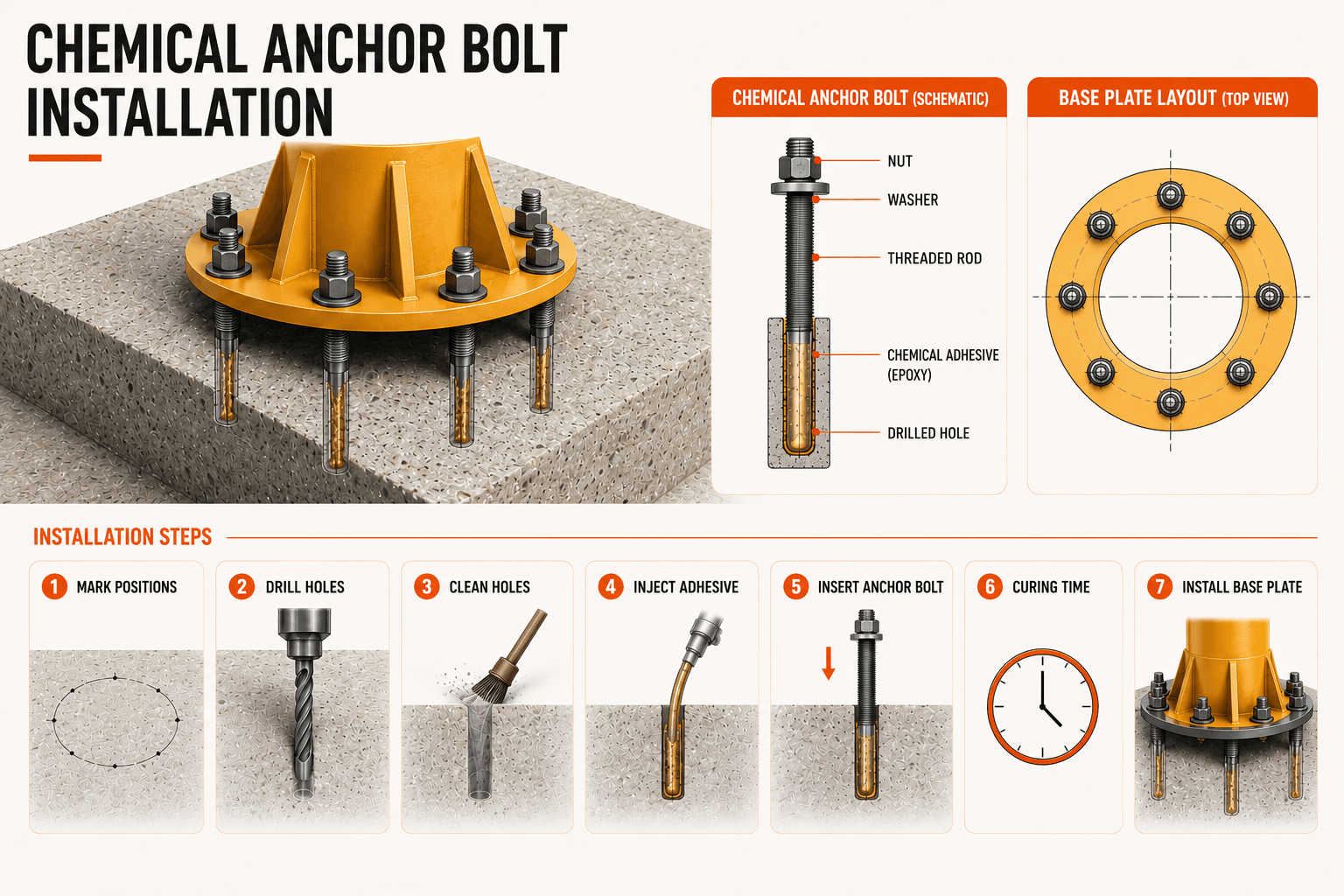
Chemical anchor bolts are commonly considered for some light-duty freestanding jib cranes, typically in the approximate range of 0.25–1 ton. However, suitability cannot be determined by crane capacity alone. The existing concrete must also be checked for strength, thickness, reinforcement, required anchorage depth, edge distance, and the overturning moment generated by the jib crane.
Unlike an embedded anchor cage, this method does not require anchors to be installed before the concrete is poured.
Instead, holes are drilled into the existing concrete foundation according to the crane base plate pattern. After the holes are thoroughly cleaned, chemical anchoring adhesive is injected and threaded rods are inserted.
Once the chemical anchoring material has fully cured and reached the required strength, the crane column can be installed.
When Are Chemical Anchor Bolts Suitable?
If a workshop already has a concrete floor or foundation that meets the structural requirements of the jib crane, and excavating a new foundation is difficult, chemical anchor bolt installation can be evaluated.
This method is particularly suitable for:
- Existing workshop upgrades
- Workshops with completed concrete floors
- Workstations where extensive foundation excavation is difficult
- Projects requiring a relatively short installation period
Its main advantages are faster installation and less modification to the existing floor or foundation. However, this does not mean that a freestanding jib crane can be installed on any existing concrete floor using chemical anchors.
If the concrete is cracked, hollow, too thin, of unknown strength, or if the required anchor positions are too close to the foundation edge, the installation method must be reassessed.
Basic Chemical Anchor Installation Procedure
- 1. Mark the anchor positions according to the column base plate holes.
- 2. Drill holes to the specified diameter and depth.
- 3. Thoroughly remove dust and debris from the holes.
- 4. Inject the specified amount of chemical anchoring adhesive.
- 5. Insert the threaded rods and allow the adhesive to fully cure.
- 6. Install the column base, washers, and nuts.
- 7. Adjust the column verticality and tighten the anchors according to the specified requirements.
Among these steps, drilling depth, hole cleaning, and curing time are particularly important to anchor performance. Excessive dust inside the holes, insufficient anchoring adhesive, or loading the anchors before full curing can significantly reduce anchoring performance.
Not generally recommended: If the thickness, strength, reinforcement, or overall condition of the existing concrete cannot be confirmed, or if the concrete shows significant cracking, hollow areas, or structural damage, chemical anchors should not be selected based solely on crane capacity.
Embedded Anchor Cage Foundation: Suitable for Long-Term and Heavy-Duty Applications
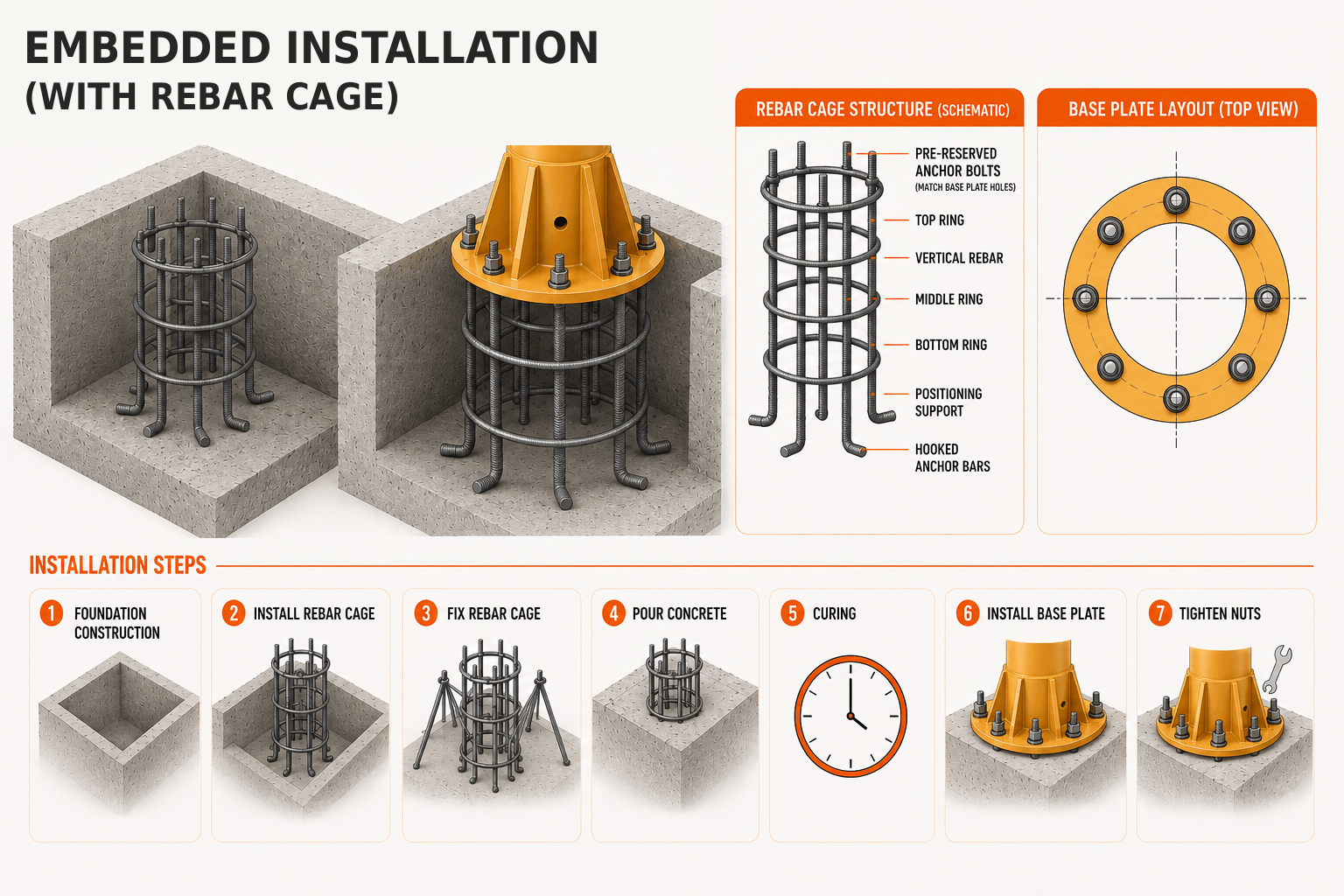
An embedded anchor cage is one of the most common foundation solutions for a freestanding jib crane. It can accommodate a wide range of applications from small and medium capacities to relatively heavy-duty cranes, with a typical reference range of approximately 0.5–5 tons.
For long jib arms, higher lifting capacities, frequent lifting operations, or applications with large overturning moments, this foundation method is often given priority.
Embedded installation requires excavation of a foundation pit. Reinforcement, anchor bolts, and positioning components are installed inside the foundation before the concrete is poured.
After the concrete has reached the specified installation strength, the crane column base is mounted onto the embedded anchor bolts.
When Is an Embedded Anchor Cage Suitable?
An embedded anchor cage is particularly suitable for new workshops or projects where civil construction is still in progress.
If the freestanding jib crane location and main technical parameters are determined during the workshop construction stage, the foundation and anchor cage can be designed and installed in advance. This helps minimize modifications to the finished workshop floor later.
An embedded foundation should generally be given greater consideration for:
- Permanent workstations
- Higher-capacity jib cranes
- Longer jib arms
- High-frequency lifting operations
- Applications involving significant dynamic loads
- Projects requiring greater foundation integrity and overturning resistance
Compared with chemical anchors and large base plate connections, an embedded anchor cage transfers the loads and overturning moment generated by the crane column into a larger concrete foundation, creating a more integrated anchoring system.
Basic Embedded Anchor Cage Installation Procedure
- 1. Excavate the foundation according to the specified dimensions.
- 2. Fabricate the anchor cage and accurately position the anchor bolts.
- 3. Secure the anchor cage to prevent movement during concrete pouring.
- 4. Pour and properly vibrate the concrete.
- 5. Cure the concrete according to the specified requirements.
- 6. Install the crane column after the foundation reaches the required installation strength.
- 7. Adjust the column verticality and tighten the anchor nuts.
During construction, particular attention should be paid to the position, spacing, verticality, and exposed length of the anchor bolts. If the anchor cage is not properly secured, concrete pouring and vibration may cause the anchor bolts to shift, making it difficult or impossible to align the crane base plate during installation.
Limitation to consider: Although an embedded anchor cage provides excellent foundation integrity, it requires excavation, reinforcement work, concrete pouring, and curing. Therefore, the civil work and installation time are generally greater than with the other two methods.
How to Choose Between the Three Freestanding Jib Crane Foundation Methods
The capacity ranges below are intended only for preliminary reference and should not be treated as foundation design standards.
| Installation Method | Reference Capacity | More Suitable Site Conditions | Main Characteristics |
| Chemical Anchor Bolts | 0.25–1 ton | Existing concrete floors, workshop upgrades, sites where excavation is difficult | Fast installation and minimal modification, but highly dependent on existing concrete conditions |
| Large Base Plate | 1–3 tons | New concrete floors, limited excavation space, anchor bolts can be positioned in advance | Larger load distribution area and reduced need for deep foundation excavation |
| Embedded Anchor Cage | 0.5–5 tons | New workshops, permanent installations, heavy-duty or frequent lifting | Better structural integrity and overturning resistance, but requires more civil work |
Important: Even when two freestanding jib cranes have exactly the same rated lifting capacity, differences in jib length, lifting height, and operating conditions can result in different foundation loads. Therefore, the final foundation method should never be selected solely according to the capacity ranges shown above.
A Simple Preliminary Selection Guide
Existing concrete floor and excavation are difficult
→ First verify the existing concrete conditions. For light-duty cranes, chemical anchor bolts may be evaluated.
New concrete floor: anchor bolts can be positioned in advance, but deep excavation is restricted
→ A large base plate installation may be evaluated.
New workshop, permanent operation, higher lifting capacity, long jib arm, or frequent lifting
→ An embedded anchor cage foundation is generally preferred.
These guidelines are intended only for preliminary selection. The final foundation design should always be confirmed according to the crane parameters and actual site conditions.
Why Shouldn’t the Foundation Be Selected by Crane Capacity Alone?
This is one of the most easily overlooked aspects of freestanding jib crane foundation design.
For example, consider two jib cranes both rated for 1 ton. One has a 2-meter jib arm, while the other has a 6-meter jib arm.
When the load reaches the outer end of the jib, the overturning effect acting on the column foundation can be significantly different between the two cranes.
Therefore, determining whether a foundation method is suitable requires consideration of at least the following factors:
- Намінальная грузападымальнасць
- Jib length
- Вышыня ўздыму
- Crane self-weight
- Duty class and operating frequency
- Dynamic loads
- Foundation and concrete conditions
This is why a jib crane manufacturer will normally ask not only, “What lifting capacity do you need?” but also about the required jib length and site foundation conditions before confirming the installation solution.
What Information Is Required Before Installing a Freestanding Jib Crane?
If you are unsure whether your project should use chemical anchors, a large base plate, or an embedded anchor cage, it is not advisable to make the decision based only on crane capacity.
Before selecting the foundation solution, prepare the following information:
- 1. Rated lifting capacity
For example: 500 kg, 1 ton, 2 tons, or 5 tons. - 2. Jib length / working radius
The distance from the center of the crane column to the outer end of the effective working area. - 3. Required lifting height
The effective vertical lifting height required from floor level to the hook. - 4. Existing foundation conditions
This includes concrete thickness, strength, and reinforcement. For a new workshop, provide the planned foundation conditions if available. - 5. Photos or drawings of the installation area
Site photos, workshop layouts, and foundation drawings can help determine the available construction space and identify surrounding structures that may affect installation.
Based on this information, the loads and overturning moment acting on the foundation can be further evaluated, allowing a more suitable foundation and anchoring method to be selected.
For heavy-duty, long-jib, high-frequency lifting applications or projects with complex foundation conditions, the foundation should be specifically designed and structurally verified according to the actual crane parameters rather than using generic foundation dimensions.
Only when the concrete foundation, anchoring system, column base, and freestanding jib crane structure form a properly designed and securely connected system can the crane operate safely, reliably, and consistently over the long term.
